

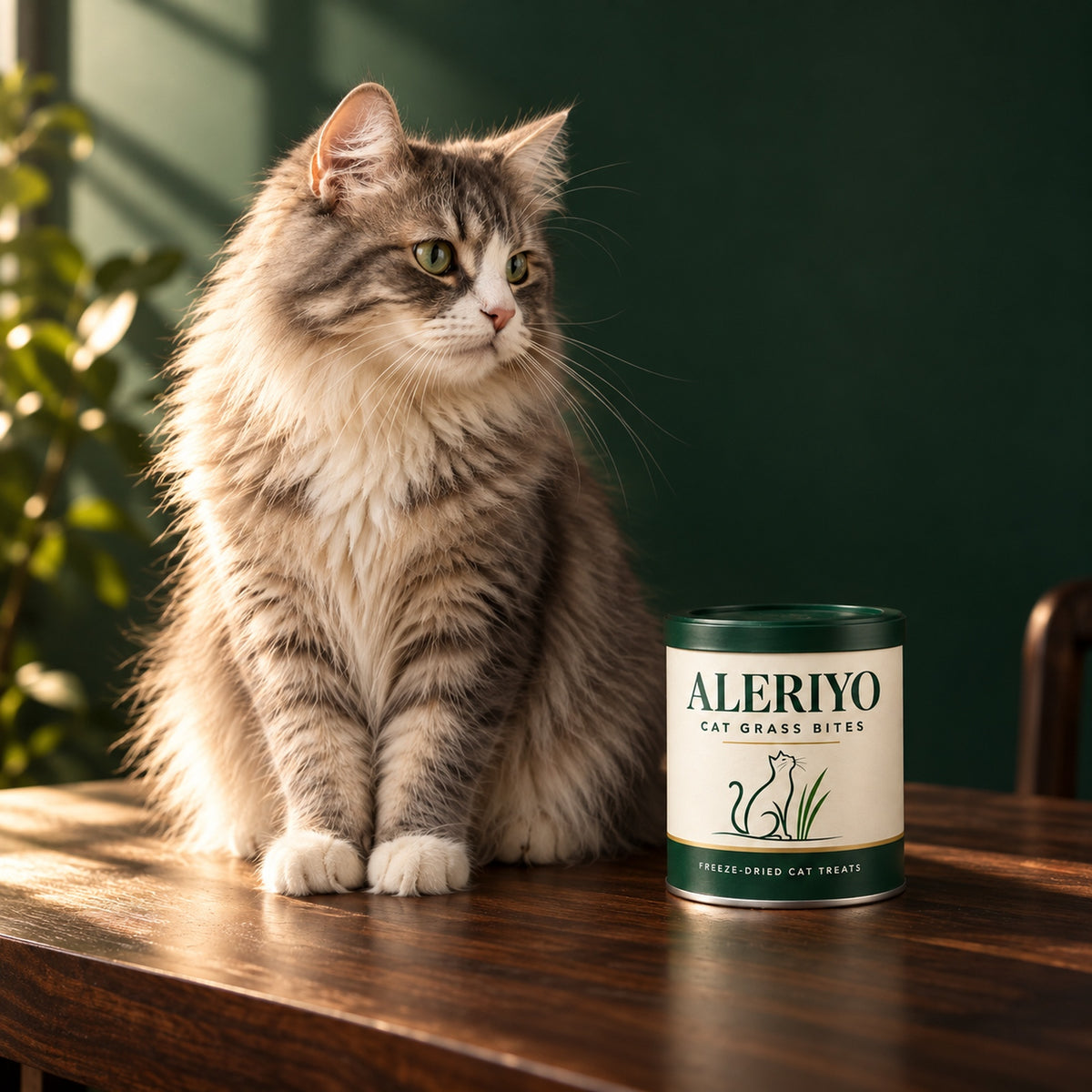


Aleriyo's Freeze Dried Hairball Relief Treats
Freeze-dried treats that help swallowed fur pass through, instead of coming back up at 5am.
- Hair leaves in the litter box
- Quiet mornings. Clean rugs.
- Cats eat it. No fighting.
- One treat a day. That's it.
Every cat owner knows the sound.

Tap the ones that happen in your house:
- The long dry heaving that goes on and on and produces nothing
- Finding what it did produce later, in the dark, with a bare foot
- Chewing houseplants, cardboard, carrier bags, anything fibrous
- A cupboard of pastes and gels they refused after day three
None of it means you are doing anything wrong. You brush them. You feed them properly. It happens anyway, because a cat grooms for hours a day and every pass of the tongue swallows loose fur. Their food cannot break that fur down, so it collects until the only way out is back the way it came.
There is another way out. That is the entire point of these.

A few a year is normal. Every week is not.
When it goes weekly, vets stop calling it a nuisance. Here is what it turns into — and what a treat a day does about it.
Hair that sits gets hard
Not every hairball comes up. The ones that stay can harden over months, until the cat can no longer bring them up or pass them. That is the kind that gets stuck.
What the treat does: moves today’s fur out today, so nothing sits long enough to turn into that.Being sick costs the cat meals
Every episode is a lost dinner and acid where it does not belong. Cats that keep being sick start to link eating with feeling awful, and eat less.
What the treat does: sends fur out the back end instead, so there is less to bring up in the first place.Whatever is causing it carries on
In two large studies of cats who were sick often, nearly all of them had something going on in the gut once a vet looked. “It’s just hairballs” is the sentence that delays the appointment.
What the treat does: nothing. No treat fixes this one. That is what the vet is for, and we would rather say so.- Retching over and over with nothing coming up
- Off food, or losing weight
- Sore belly, hiding, low energy
- Weekly hairballs in a short-haired cat
These treats are a daily habit for keeping swallowed fur moving. They are not a treatment for any illness, and nothing here replaces a vet looking at your cat.
Swallowed fur has two ways out. Most products aim for the wrong one.
Pastes and gels mostly help a cat bring fur back up. Even when they work exactly as intended, you still get the noise at five in the morning and something to clean off the rug. The hairball was never solved. It just changed address.

Break the fur down. Cat food has nothing in it that can soften swallowed hair. These are built around the part that can, so the clump stops behaving like a clump.
Move it along. Plant fibre carries the broken-down fur through the gut steadily, in the direction everything else already goes.
It leaves in the litter tray. Not on the carpet, not at 5am. The sound stops because there is nothing left to bring up.
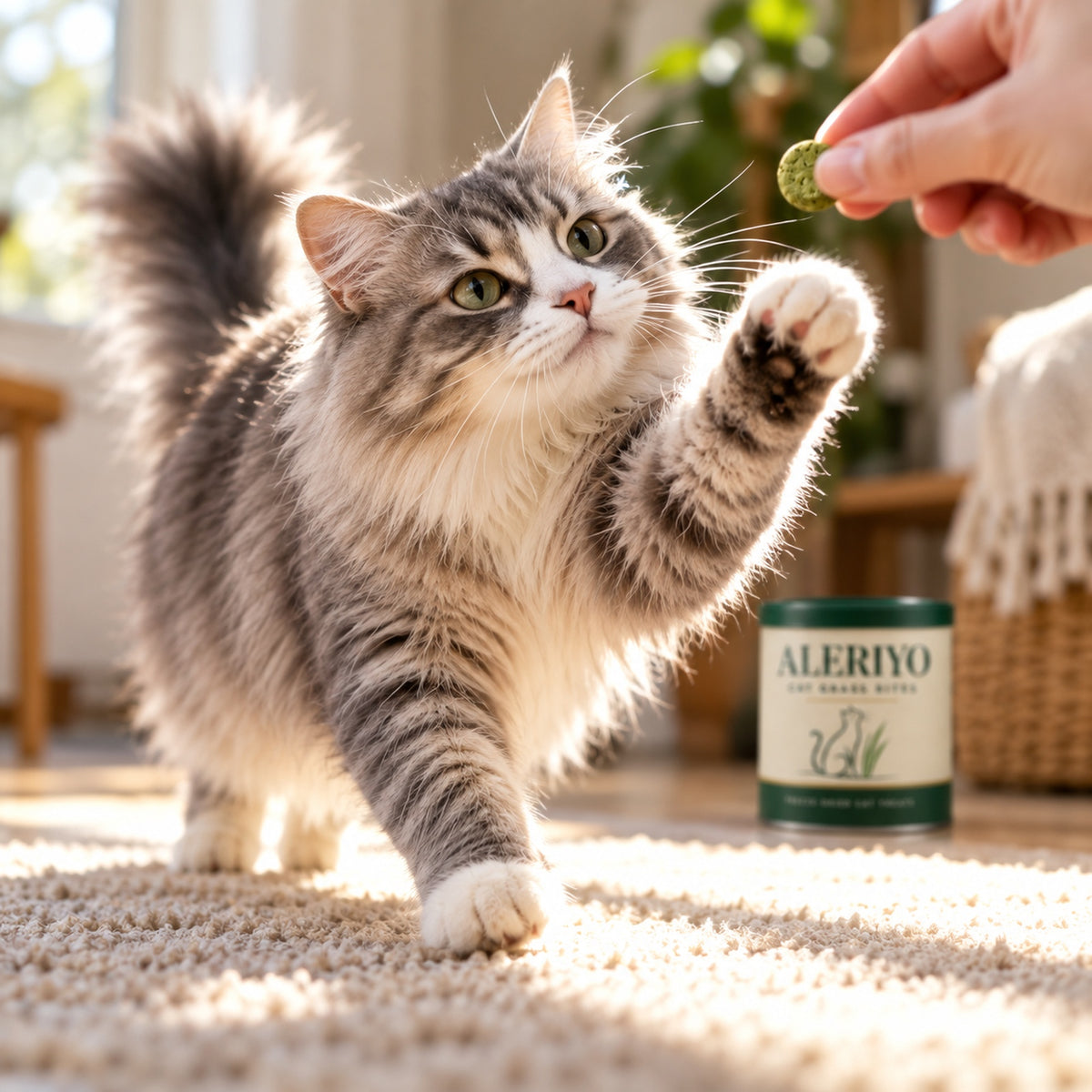
One a day. Your cat will think it is just a treat.
"Will my cat actually eat it?"

That is where every other hairball product went to die, isn't it. The paste they got wise to by day three. The gel you ended up wiping on a paw while they looked at you like a stranger. The chews they sniffed once and walked away from.
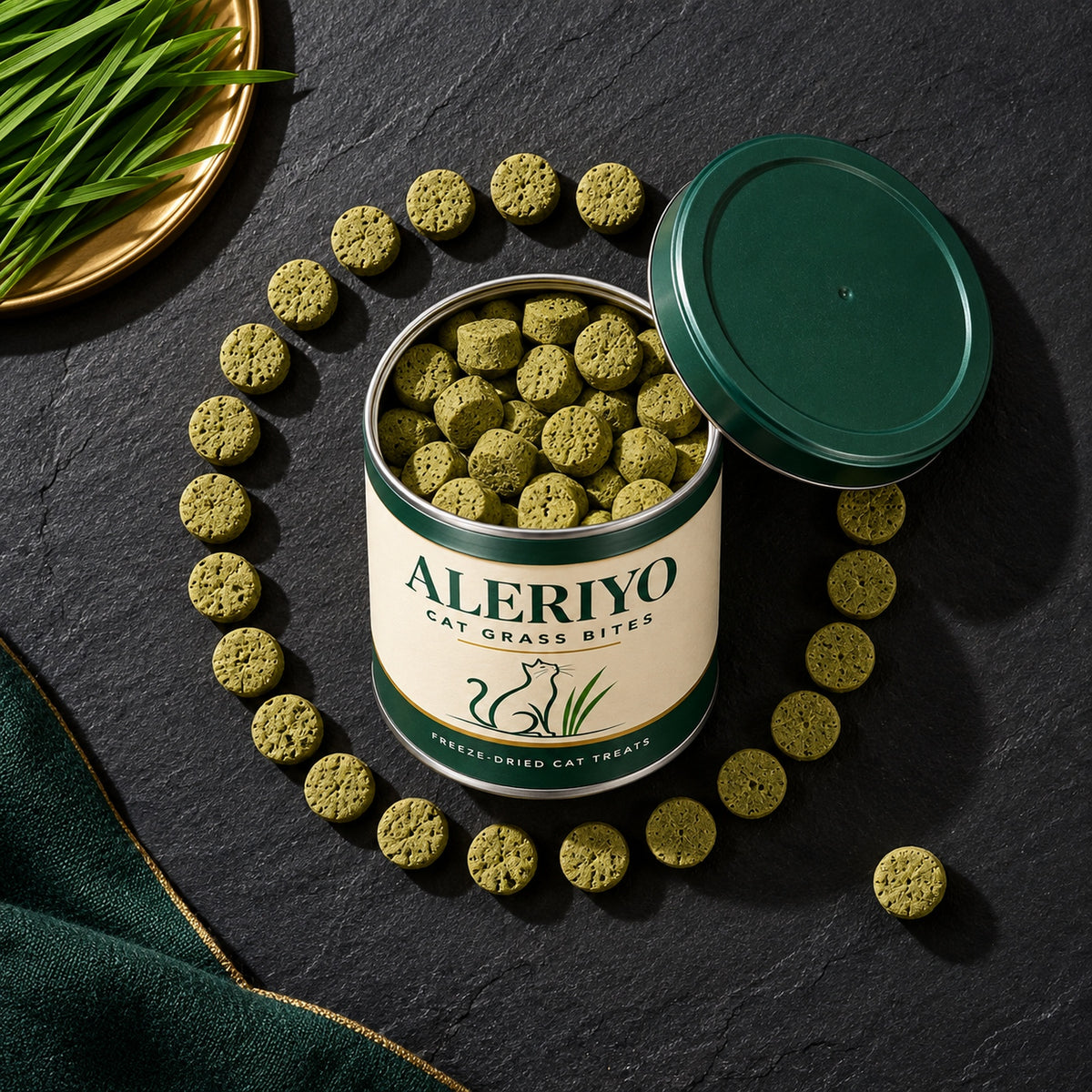
These are freeze-dried, not formed into a chew. Freeze-drying takes the water out and leaves the smell in, which is the whole reason a cat comes over in the first place. It reads as food, not medicine, and nothing about it needs negotiating.
No syringe, no holding them still, no wiping anything on anyone. You put one down and walk away.
See If Your Cat ApprovesIf they refuse them, the Clean Carpet Guarantee covers you. Keep the tin.
Short list. Every line has a job.

- 50%Chicken breast
Half the treat is meat, and that is not a nutrition decision — it is the reason your cat eats it. A hairball remedy only works on the days it actually gets taken.
- 13%Barley grass
The cat grass itself. The fibrous green they go looking for when they start chewing houseplants and carrier bags. Freeze-dried into the treat instead of grown in a pot on the windowsill.
- 12%Plant cellulose
Insoluble fibre — it does not gel and it does not lubricate. It adds bulk and grip, so the gut has something to push a mass of swallowed fur along with rather than sliding around it.
- AlsoPsyllium husk
The soluble half of the fibre pair. It holds water and keeps the whole load moving smoothly instead of drying out on the way through.
- AlsoKeratinase
An enzyme that works on keratin — the protein fur is actually made of. It is the part of the formula aimed at the hair itself rather than at the journey it takes.
- AlsoChicken liver & heart
Organ meat, in for smell. Freeze-drying pulls the water out and leaves the aroma in, which is what brings a suspicious cat across the kitchen in the first place.
- AlsoTaurine
An amino acid cats cannot make enough of themselves. Standard in anything a cat eats daily, and this is meant to be eaten daily.
- AlsoZinc, vitamin E, B complex
The other end of the problem: coat condition. Fur that stays on the cat is fur that never gets swallowed.

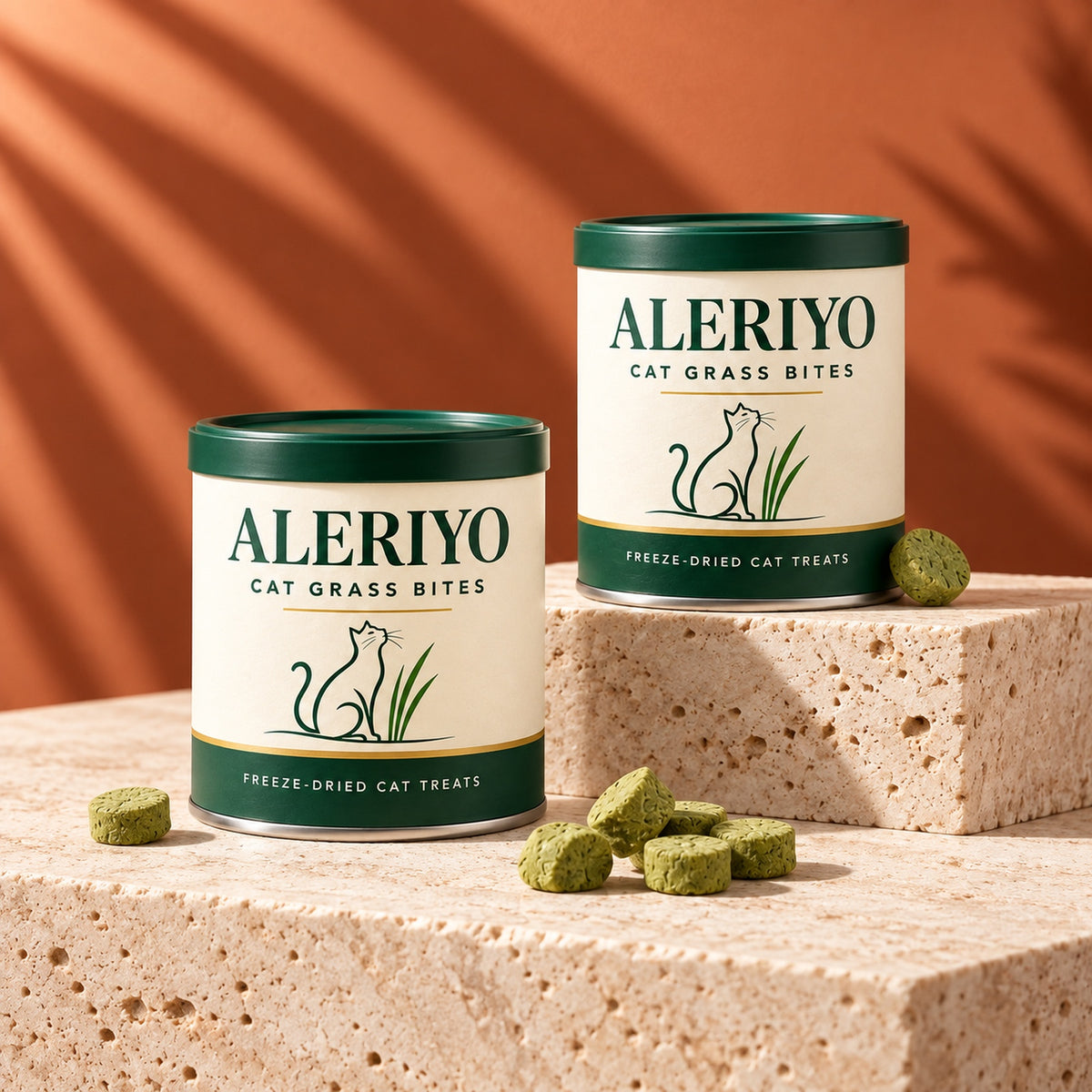
Barley grass and plant cellulose are the 25% plant fibre on the front of the tin. For cats over 6 months. If your cat has a diagnosed condition, is pregnant, or is on medication, check with your vet before adding anything daily.
Retire the paste.

| Aleriyo | Malt paste | Hairball kibble | Grass pot | |
|---|---|---|---|---|
| Cat takes it willingly | ✓ | ✗ | ~ | ~ |
| Aims for through, not up | ✓ | ✗ | ~ | ~ |
| No holding them still | ✓ | ✗ | ✓ | ✓ |
| No diet change | ✓ | ✓ | ✗ | ✓ |
| No mess to maintain | ✓ | ~ | ✓ | ✗ |
| Works for a fussy cat | ✓ | ✗ | ✗ | ~ |
Paste has helped cats for decades and your vet may well still suggest it. The difference is not effort, it is compliance: the hairball product that works is the one your cat still accepts in week six.
Under a dollar a day. Versus the bill you hope never lands.

When swallowed fur stops moving altogether, the word the vet uses is obstruction, and clearing one runs from several hundred dollars into four figures if it needs surgery. Nobody budgets for that. Most people meet it at an emergency clinic late at night.
A treat a day that keeps fur moving costs about 87 cents a day, or 58 cents on the three-tin bundle, or less on subscription. That is the whole trade.
About 40 days.
About 80 days.
About 120 days. Best per tin.
Bundle and subscription pricing applies at the top of this page.
What to expect, honestly.

The easy part, and the part that tells you whether this will work at all: your cat decides these are food. If they do not take them, stop here and take the guarantee.
Quieter mornings. The heaving sessions get shorter and less frequent as fur that had been collecting starts moving through instead of back up.
The real test, and the reason the daily habit matters. Fur leaves about as fast as it gets swallowed, so it never reaches the size that causes a problem.
If your cat won't touch them, it's free.
Refused them? Mornings no quieter? Tell us within 60 days and we refund the order. Keep the tin. No return label, no questionnaire.
Questions, answered straight.
What if my cat is the fussiest cat alive?
That is the cat these exist for. They are freeze-dried rather than formed into a chew, so they smell like food and read as a treat instead of a supplement. Start by offering one from your hand, or crumble one over their dinner. If they still say no, the guarantee covers you.

How many do I give?
One a day for an average adult cat, every day. The daily part is the part that works: fur gets swallowed daily, so it has to be moved daily. Full feeding detail is on the tin.

How long does a tin last?
About 40 treats, so roughly 40 days for one cat at one a day. If you have two cats, a tin lasts about half that, which is what the bundles and the subscription are for.
Is there any cat who shouldn't have them?
If your cat has a diagnosed condition, is on medication, is pregnant, or is a kitten, check with your vet before adding anything to their diet. A cat that is retching repeatedly and producing nothing, is off food, or seems in pain needs a vet now, not a treat: that can be an obstruction, and it is an emergency.
How fast will I see a difference?
Most of the change people notice is in the first couple of weeks, as collected fur starts passing. The fuller picture takes a shedding cycle, because that is when daily use actually earns its keep. Anyone promising you an overnight fix is selling you something.
Can I give them to more than one cat?
Yes, and each cat needs their own daily one. Multi-cat homes work through a tin roughly twice as fast, so the two and three tin bundles tend to be the sensible buy.

If your mornings start with that sound, these are worth a try.
Your cat will think they are just treats.
The litter tray will tell you otherwise.
Backed by the 60-day Clean Carpet Guarantee.

